
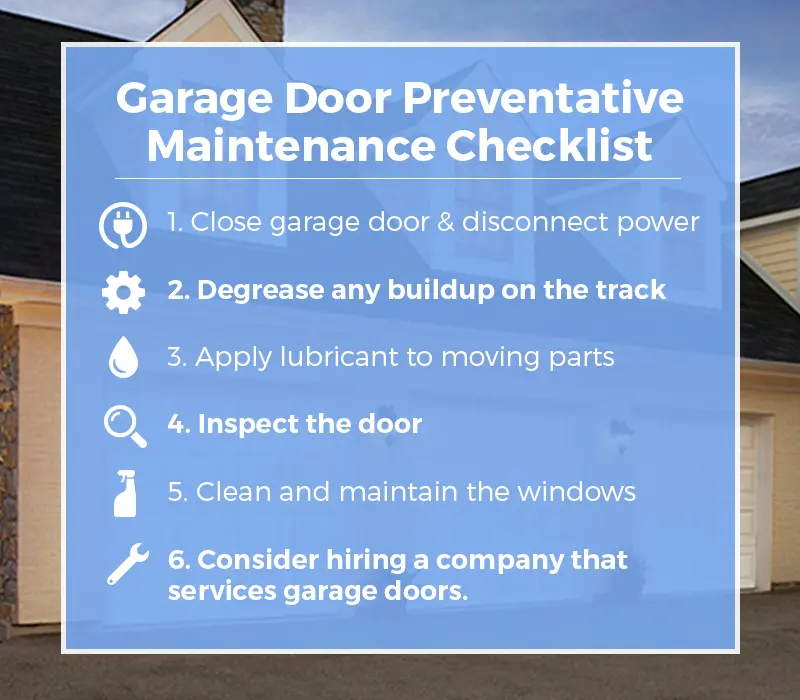
Performing annual preventative maintenance on your garage door helps extend its lifespan, prevents costly repairs, reduces noise, and ensures safe operation. Experts recommend a full check at least once a year (ideally in spring or fall), with some tasks done more frequently. Many steps are DIY-friendly, but high-tension parts like springs require professional handling due to injury risk.Step-by-Step DIY Maintenance Checklist
- Visual Inspection
Examine the door panels, tracks, rollers, hinges, springs, and cables for signs of wear, rust, cracks, fraying, or damage. Look for loose hardware (bolts, nuts, brackets). Tighten any loose bolts with a socket wrench, but avoid over-tightening. - Clean the Components
Wipe down tracks with a damp cloth to remove dirt and debris (do not lubricate tracks, as it attracts grime). Clean photo-eye sensors (near the floor) with a soft cloth. Wash the exterior door if needed. - Lubricate Moving Parts
Use a garage door-specific lubricant, silicone-based spray, or white lithium grease
(avoid WD-40 as a primary lube—it evaporates quickly and attracts dirt).
Apply to:
• Hinges
• Rollers (metal ones; skip sealed nylon rollers)
• Springs
• Bearing plates
• Arm bar/pivot points
Open and close the door a few times to distribute. - Check Door Balance
Disconnect the opener (pull the red release cord). Manually lift the door halfway—it should stay in place. If it falls or rises, the springs need professional adjustment. - Test Safety Features (Do Monthly + Annually)
• Photo-Eye Sensors: Wave an object (like a broom) through the beam while closing—the door should reverse.
• Force-Reverse Test: Place a 2×4 or sturdy object on the ground in the door’s path. The door should reverse upon contact.
If either fails, call a professional immediately—these features prevent serious injury. - Inspect Weatherstripping and Seals
Check bottom seal and side/top weatherstripping for cracks or wear. Replace if brittle to prevent drafts, water, or pests. - Opener and Accessories
Test remote batteries, wall button, and backup battery (if equipped). Listen for unusual noises from the opener.
When to Call a Professional
• Spring adjustments or replacements (dangerous high tension).
• Cable repairs.
• Major alignment issues or broken parts.
• Full tune-up if you’re unsure—many services offer affordable annual inspections.
Regular maintenance can prevent breakdowns and keep your door operating smoothly for 15–20+ years. If your door is noisy, jerky, or slow, address it sooner!
Lorem ipsum dolor sit amet, consectetur adipiscing elit. Praesent vitae metus odio. Nam pellentesque turpis at vehicula vulputate. Etiam dignissim consectetur nibh, nec suscipit quam interdum vitae. Integer eu justo ornare, luctus purus ultrices, pellentesque nisi. Cras sed vulputate purus. Fusce at elementum dolor, vitae dignissim odio. Sed tincidunt massa sit amet malesuada pretium.
Morbi et nisl sit amet neque semper hendrerit sagittis eget odio. Aenean dapibus ligula sem, id lacinia libero accumsan in. Maecenas sagittis dignissim facilisis. Suspendisse rutrum id urna in faucibus. Nulla facilisi. Donec sit amet ornare magna, sit amet pharetra mauris. Nulla vitae quam et lectus sollicitudin ultricies
Nunc aliquam nibh mauris, ac faucibus augue imperdiet id. Fusce accumsan, nisl eget mollis vehicula, metus ex vulputate risus, a facilisis neque lorem tempor nisl. Vestibulum et mi erat. Curabitur rhoncus orci nec eros faucibus tempus. Ut leo quam, feugiat sed gravida rutrum accumsan ante.